If you're searching for sites like OnlyFans (OF), you're probably not looking for a “clone.” You're looking for more control over your income and your time.
Maybe your week already feels like this: rules are hard to predict, payout timing doesn't feel clear, and DMs keep you online longer than you planned—just to keep income steady.
The good news is that there is no one “perfect” replacement. But there are better-fit options depending on what matters most to you: discovery, AI-friendly tools, cleaner branding, or less chat burnout.
What you’ll learn in this article:
- why creators start looking beyond OF
- what to compare before you move
- the best sites like OF to check first
- how to switch without losing momentum
- what to remember about rules and taxes
If you want more control over your content and your workday, this guide will help you make a smarter next move.
Why creators start looking for sites like OF
Looking beyond OF is not just about frustration: it's about building a creator setup that gives you more control—over growth, rules, and how much of your day gets consumed by DMs.
This section breaks down the main reasons people start shopping around. It helps you figure out whether your problem is really fees, weak growth, or the daily stress of running everything alone.
Rules can feel hard to predict
A lot of creators don't leave because one bad thing happened. They leave because they feel like the platform can change faster than they can plan. When your income depends on one account, that feeling gets heavy fast.
That is also the business risk of platform lock-in. When your sales, fan access, and message history live in one place, a rule change or account review can cost you momentum overnight. Even if you stay on OF, building a second outlet (and keeping your links and content backed up) gives you leverage and peace of mind.
DMs can turn into a full-time job
For many creators, content is not the hardest part. The hardest part is keeping up with DMs, follow-ups, and paid chat without being online all day. If chatting eats your energy, your business can start to feel like a shift instead of a brand.
Growth can feel slow when you are new
If you don't already have a big audience, it can be hard to get seen. That's why many creators start looking for platforms with better built-in discovery, better profile tools, or a clearer way to turn casual fans into paying fans.
What to compare before you move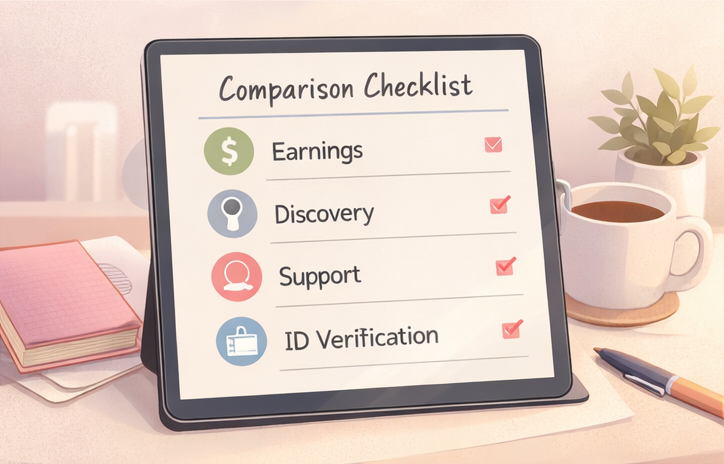
Before you open a new account, compare the parts that affect your day-to-day work. This section helps you avoid moving for the wrong reason and ending up with the same stress in a different app.
Look at the money flow, not just the headline fee
A lower fee sounds great, but it's not the whole story. Check when funds become available, how payouts work, and whether extra delays, holds, or payment issues may affect your cash flow. Also check payout speed and how the platform handles refunds or chargebacks, because that can decide whether a “good month” actually stays a good month.
Quick 10-minute check:
- Open the platform’s payout FAQ and write down the payout schedule, minimum, and payment methods.
- Search the help center for “chargeback”, “refund”, or “dispute” and see what happens to your earnings.
- Look for notes about payout holds for new accounts or large transactions.
- If possible, run a small test transaction before you move your whole audience.
Check how new fans find you
Some platforms are stronger at internal discovery than others. If you are still growing, search, tags, profile recommendations, and in-platform suggestions can matter more than small fee differences.
Review the rules before you build there
Look at ID checks, age requirements, AI content rules, and what happens if content includes other people. You want a platform that fits your style without making compliance confusing later.
Best sites like OF to check first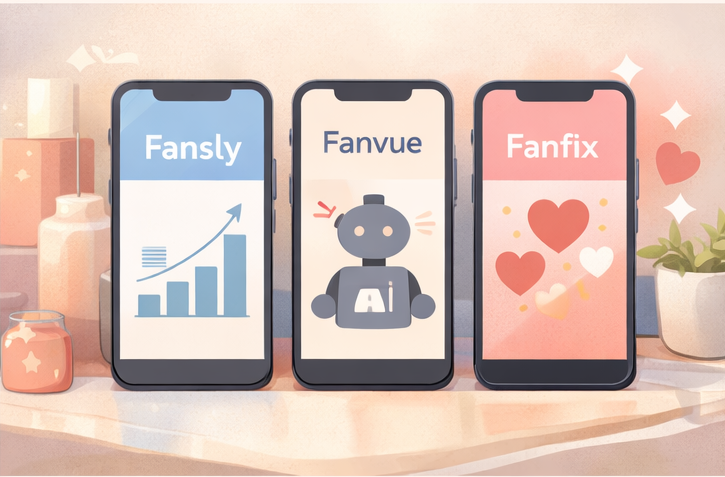
Here are the best sites like OF to start with if you want real creator options instead of random lookalikes. Each one solves a different problem, so the best choice depends on what you need most.
For a more detailed comparison of Fansly and Fanvue specifically — including fees, payout speed, and which creator profile fits each one — this guide to OnlyFans alternatives goes deeper on the platforms most worth considering.
Fansly is good for getting you discovered
Fansly is a smart first stop for creators who want help getting found. Best for: newer creators who want in-platform discovery, creators who post frequently, and creators who want tag/hashtag browsing to do some of the “finding fans” work for them.
Fansly's help center says creators go through age, identity, and consent checks, and it also highlights tags, hashtags, and suggestion tools that can improve discoverability. That makes it appealing for newer creators who don't want to rely only on outside traffic.
Source: https://help.fansly.com/en/articles/12315241-getting-started-on-fansly
Fanvue fits creators who want AI-friendly tools
Fanvue stands out if you want a modern setup with AI-friendly features. Best for: creators who manage lots of conversations, selling through paid DMs, or getting help drafting captions and replies as part of a faster workflow.
Its official 2026 guide says creators can earn through subscriptions, paywalled posts, paid DMs, and tips, and it says the platform fee is 15% for the first 30 days after KYC verification, then 20% after that.
Source: https://blog.fanvue.com/what-is-fanvue/
Fanfix may work if you want a cleaner creator brand
Fanfix can be a better fit for creators who want a more mainstream-feeling brand and direct fan payments. Best for: creators who want a cleaner brand vibe, want to feel more “mainstream” in tone, or prefer a platform that feels less adult-first in positioning.
Fanfix's creator terms say creators receive 80% of direct payments, and the terms also explain that AI-assisted content is allowed if it stays compliant.
Source: https://auth.fanfix.io/creator-terms-of-use
Bonus options if subscriptions are not your main plan
Some creators are not looking for another monthly subscription setup. If you prefer one-off purchases or lightweight support, these options can fit your workflow.
ManyVids can fit if you sell videos one by one (PPV)
If your strongest product is video and you prefer selling each clip separately, a pay-per-video marketplace can be a better match than a subscription-first platform. This can also reduce pressure to be online every day.
Ko-fi can work if you want tips, memberships, and a more mainstream vibe
If you want a lightweight “support” model (tips, memberships, and digital products) and you want to keep your creator brand more mainstream, Ko-fi can be a useful add-on. Many creators use it alongside a main platform, not as a full replacement.
How to switch without losing momentum
Switching platforms works best when you treat it like a rollout, not a panic move. This section shows how to protect your audience, your time, and your energy while you test a new setup.
Your DM system travels with you regardless of which platform you move to — this full guide to OnlyFans message ideas and templates gives you a portable structure for welcome messages, re-engagement, and PPV pitches that works on any creator platform.
Pick one main platform first
Do not try to rebuild everywhere at once. Start with one main platform, then follow a simple setup order:
- Claim your username and complete verification.
- Fill out your bio, pricing, and a short welcome message.
- Post a small starter library so a new fan has a real reason to stay.
- Test one paid flow you plan to use (subscription, paid DM, PPV, or tips).
- Only then start promoting it consistently.
Tell fans what changes and what stays the same
Your fans do not need a long speech. They need three things: where to go, what they will get there, and what happens to their current support.
Before you write your own message, it helps to look at the kinds of short, personal messages that often work well for creators. In practice, strong welcome and transition messages are usually easy to reply to and simple to follow. The examples below are sample structures designed to show common patterns across subscription platforms: a warm opening, one clear prompt, and a simple next step.
Sample welcome-message pattern:
A strong welcome message usually does four things in one short note: it shows personality, thanks the subscriber, gives them an easy way to reply, and opens the door to a longer conversation. In the sample below, the creator mixes identity (“I’m...”), appreciation (“Thanks for subscribing”), and one low-pressure call to action (“tell me something fun about yourself”). That structure works well because fans do not have to guess how to respond.
Caption: Example welcome-message structure: personality + appreciation + one easy reply prompt.
Sample chat pattern:
Another common pattern is simple back-and-forth small talk. It may look easy, but this is exactly where DM time starts to expand. A creator answers where a fan lives, what time it is, or what they are doing that day, and one short conversation quickly turns into multiple replies. That is why DM management becomes a real workload even before the sales part begins.
Caption: Real-world DM flow: light small talk can quickly turn into a time-heavy conversation.
Simple rollout (soft transition):
- Week 1: Build the new page and post consistently.
- Week 2: Announce softly (pinned post + link-in-bio) and keep your current platform active.
- Week 3: Remind fans once, then keep the message consistent and simple.
Copy/paste announcement options:
Soft move version:
“Hey! I’m adding a new home for my content so I can post more consistently and reply faster. Starting [DATE], new posts will be on [PLATFORM]. If you’re already subscribed here, nothing changes today—I’ll keep posting here through [DATE]. Here’s the link: [LINK]. Thank you for supporting me 💛”
Pinned-post version:
“I’ve opened a new page on [PLATFORM]. New posts start on [DATE], and I’ll keep this page updated through [DATE]. If you want the newest content in one place, here’s the link: [LINK]. Thank you for being here.”
Subscriber-update version:
“Quick update for you 💛 I’m starting a smoother setup on [PLATFORM] so I can post more consistently and manage messages better. New content starts there on [DATE]. If you’re already subscribed here, nothing changes right away. You can join me here when you’re ready: [LINK].”
How to customize these templates:
Paste one version into a pinned post, your link-in-bio announcement, or a subscriber update message. Replace [DATE] with your actual switch date, [PLATFORM] with the new platform name, and [LINK] with your direct profile URL. If you are doing a soft transition, keep the old page active until the second [DATE] mentioned in your message so current subscribers do not feel rushed or confused.
Fix your DM workflow before burnout comes back
If your biggest problem is not content but the daily weight of DMs, FanPort may be worth considering alongside a platform move. It is designed to support repetitive chat work with AI-assisted drafts and reply support while keeping final review in your hands. That can help reduce manual DM workload and create more room for content and high-value conversations. If DM management is the main reason you're considering a switch, it may be worth comparing workflow tools alongside platform options.
If you want to explore that option, learn more about FanPort here: Want to grow faster with this service? Click here.
Rules and tax basics to keep in mind
This section covers the basics you shouldn't ignore. It helps you avoid preventable mistakes around verification, platform policy changes, and tax forms that may affect creators in 2026.
Expect ID and age checks on serious platforms
Serious creator platforms usually want proof that you are 18+ and able to post legally. Plan for verification before you migrate:
- Prepare a clear photo of a government ID and a matching selfie.
- Consistently use your legal name and payout info to avoid delays.
- If you collaborate, learn what consent/verification proof is required and save it.
Fansly’s official getting started guide says creators must verify age, identity, and consent, and it lists multiple application steps before approval.
Source: https://help.fansly.com/en/articles/12315241-getting-started-on-fansly
Treat platform policies as moving rules
This is not legal advice. Platform policies are subject to change, so always check the current Terms of Service. That same mindset should apply to any platform you use, especially if your content, collabs, or AI tools sit close to policy lines.
A practical way to stay safe:
- Bookmark the Terms, Acceptable Use, and AI/content policy pages.
- Follow the platform’s official announcement channel or update emails.
- Before new formats (new collaboration, new AI tool, new content style), re-check the specific rule page that covers it.
- Keep a simple backup routine for your content and links so you are not stuck if something changes suddenly.
Do not assume tax reporting equals tax responsibility
The IRS said in October 2025 that the federal Form 1099-K threshold reverted to payments over $20,000 and more than 200 transactions. Even so, creators should not assume that “no form” means “no tax.” Keep records from day one and check current rules for your location.
Source: https://www.irs.gov/newsroom/irs-issues-faqs-on-form-1099-k-threshold-under-the-one-big-beautiful-bill-dollar-limit-reverts-to-20000
The best site like OF is the one that matches your real bottleneck and reduces your dependence on a single platform. If you need discovery, start with Fansly. If you want AI-friendly tools, look at Fanvue. If you want a cleaner creator brand, check Fanfix. If subscriptions aren't your main plan, add a PPV or tip-based option. And if your real problem is the daily weight of DMs, build a workflow that protects your time from the start.
FAQ
Q1. What is the best site like OF for beginners?
Fansly is often the easiest first check if you want built-in discovery and a clear creator onboarding path.
Q2. Which OF alternative is best for AI-friendly creators?
Fanvue is one of the best options if AI tools are part of your plan.
Q3. Which platform feels more brand-safe or mainstream?
Fanfix might feel cleaner for creators who want a less adult-first brand vibe.
Q4. Should I leave OF completely right away?
Not always. A soft transition is usually safer than moving everything in one day.
Q5. What if my biggest problem is DMs, not content?
Then your workflow matters more than the platform name. A human-led AI-assisted setup can help reduce DM pressure.
Q6. Do I only need to think about taxes if I get a 1099-K?
No. Tax responsibility can still exist even if you don't receive that form.